
"coffee shop business China"
500 article(s) found
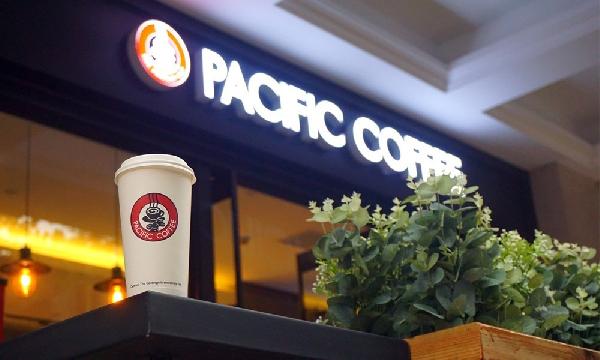
Open to join, push hand to make coffee. What game of chess is Pacific Coffee playing?
Cafes in China are affected by the market environment, with many brands and rich forms. they are the product of experience economy, with high-end well-known chain brands and independent small shops with different tastes. At the same time, as a panacea that can be used in a variety of ways, it can also be mixed with different formats. The whole coffee industry market is in a period of rapid development in which a hundred flowers blossom. Face the fierce competition

Hotel version of Lucky OYO enters the field of coffee! 13000 hotels in 300 cities are fighting for business?
Professional coffee knowledge exchange more coffee bean information please follow the coffee workshop (Wechat official account cafe_style) has always been known as the hotel version of Lucky's OYO, this time really grabbed the business with Luckin Coffee. According to the news of Sina Technology on the evening of Sept. 9, OYO Hotel opened its first coffee store, Fenran Coffee, in Xi'an, officially entering the new retail of coffee. Fenran Coffee relies on its hotel network

Foreign media commented on the rapid growth of this coffee shop chain in China.
From Best Buy to BQ, many foreign brands and business models have met their Waterloo in China. However, the Western retail concept of foreign coffee shops, which was perhaps the least likely to succeed, has flourished in China. Despite thousands of years of tea drinking in China, coffee chains from the United States, Britain and South Korea have been able to expand rapidly in China. This coffee.
China will become a big coffee consumer. How should cafes deal with themselves?
China will become a big coffee consumer. How should cafes deal with themselves? According to the statistics of the International Coffee Organization, China's coffee consumption is growing at an annual rate of about 15%, which is much higher than the global average growth rate of 2%. It is estimated that by 2025, China will become a trillion-class coffee consumption superpower. Because of this, in order to compete in the huge coffee consumption market, multinational coffee shops
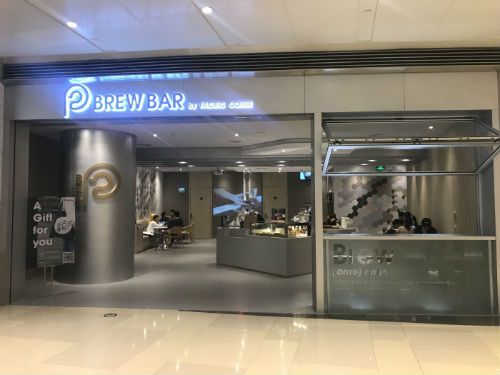
Pacific Coffee localization unfavorable launch upgrade brand to enter the "boutique coffee" market
Professional coffee knowledge exchange More coffee bean information Please pay attention to coffee workshop (Weixin Official Accounts cafe_style) repeatedly tried to introduce local elements such as national wine and tea into the products, but the results were not good. Pacific Coffee tried to enter the boutique market, opened the boutique coffee shop Brew Bar to the International Trade Mall, and marked the growth altitude, processing method, processing station and roasting of coffee beans in hand.

Li Haitao: the "one, two, three" strategy helps the development of Pacific Coffee Enterprises
According to statistics, the coffee industry is growing at an annual rate of 25%. It is estimated that by 2020, the capacity of China's coffee market will reach 300 billion, which is expected to become an important increase in the catering industry. As a result, a large number of chain coffee brands have appeared in China, deducing their imagination of the Chinese coffee market. At the same time, Pacific Coffee (Special Reading) has been in mainland China for 6 years.

Which company is Migu Coffee? China Mobile Migu Coffee Shop has opened two new stores.
China Mobile Migu Coffee has opened a new store! On April 25, Migu Coffee, a coffee chain owned by China Mobile, entered Fuzhou during the summit and opened two new stores in Fuzhou, San Fang Qi Xiang and Hongyu Mobile. According to public data, Migu Coffee is a brand chain coffee shop established by China Mobile's Migu Company, and the first coffee shop was opened in 2015.

Starbucks, Aix, COSTA and other coffee chains speed up the opening of stores against the trend.
This year, my friends often ask me why I want to speed up the opening of stores in times of economic weakness. Do you want to stop? Li Xianglu, director of Axe Coffee China, told reporters that the company has accelerated its expansion this year, with only four stores in Shenzhen at the end of 2011, while six new stores have been opened in Shenzhen so far this year, striving to open three or four new stores in the fourth quarter. Axe coffee.

Korean coffee has expanded crazily in China, but it has experienced ups and downs in only one year.
It seems that there is a contradiction between the expansion of the scale of short-term profit and the control of quality in the chain operation industry for two years, but raising the threshold of joining can reduce the risk of brand damage. For example, at the beginning of the opening of 7-11 in China, the conditions were almost harsh, and the franchisee could only take over the operation from the original poorly run stores, and the franchisee and helper needed full time. It deters some people, but

Korean coffee brands have failed in China. Is there any hope for Chinese coffee brands in the Great Leap forward?
Professional coffee knowledge exchange more coffee bean information Please follow the coffee workshop (Wechat official account cafe_style) when a typical relevant investor is eager to enter the Chinese market, what factors will mess things up? A large-scale cafe expansion is in the pipeline. Seesaw announced last month that it had received 45 million RMB A round investment from Baifu Holdings, a subsidiary of Hony Capital.

Looking forward to the development trend of coffee in China
1. Great potential for the development of the domestic coffee market after China's entry into WTO, China's economy is developing rapidly, people's living standards are constantly improving, and coffee is being accepted by more and more Chinese. Coffee is no longer just a drink, it is gradually closely linked with fashion and taste, or make friends and talk, or business talks, or leisure, in a cup of coffee filled with music.
Introduction to the Development of Coffee Industry in China in recent years
1. Great potential for the development of the domestic coffee market after China's entry into WTO, China's economy is developing rapidly, people's living standards are constantly improving, and coffee is being accepted by more and more Chinese. Coffee is no longer just a drink, it is gradually closely linked with fashion and taste, or make friends and talk, or business talks, or leisure, in a cup of coffee filled with music.

With the death of Korean "coffee king", it is time to talk about the success or failure of Korean coffee.
"Coffee King of Korea passed away" Coffee accompanied your founder Kang Hoon to commit suicide in the bathroom of his home in Ricao District of Seoul at 05:46 local time on the 24th. No suicide note was left at the scene. Company staff contact Jiang Xun has not responded, went to his home to find suicide, and immediately called 119 to declare. The police said: the company is in a financial crisis. Jiang Xun sent it to a friend on the 23rd.

Deep text | Why is costa always "always in second place" in China?
Core tip: Costa is always the second place in the Chinese coffee chain market, or Costa, the largest coffee chain in the UK, introduced top coffee products and strong Italian coffee culture to China in December 2006 because of the rapid increase in the scale, speed and brand awareness of its business development in China. But what about yoga?

The battle between coffee merchants in Shanghai is becoming more and more fierce. Kashijia competes with Starbucks.
In Shanghai today, the smell of coffee is floating in the air. This international metropolis, with a resident population of 25 million, not only has more than 4000 cafes, large and small, but more importantly, chain fast food restaurants and convenience stores have also fully joined the ranks of freshly ground coffee this winter, striving to get a share of the growing coffee consumption market. Behind the competitive layout is the rapid expansion of China's coffee market.

If the cafe is located right, it is the best marketing.
Cafes in China often give people the impression of only three forms: first, large international chain groups with hundreds or even thousands of stores in China, such as Starbucks and Costa;, Korean-style cafes that like to play star cards and attach importance to food, designed to provide leisure space for urban residents; third, independent cafes focused on small and beautiful, or heavy coffee quality, or heavy space design. Chinese mainland

Development Prospect of Coffee joining Industry
Secondly, what are the main types and future development trends of coffee franchise? According to market analysis, at present, most coffee franchisees in mainland China are commercial coffee shops, mainly for business negotiation, couple dating, chess and card leisure, and the per capita consumption value is on the high side, the period of time is long, and the age is too old. In recent years, many coffee brands have joined mainly leisure coffee, and the main body has created the third space of urban life.
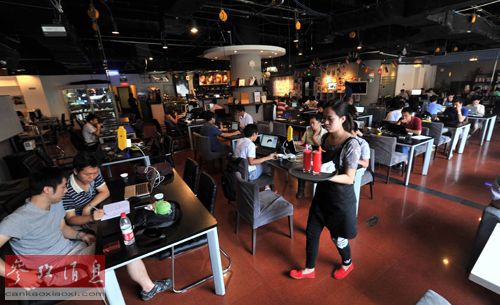
The hot Japanese media of "coffee shop entrepreneurship" in China say that due to the surge in venture capital
Japanese media reported on Sept. 8 that too much emphasis on the institutional shortcomings of large state-owned enterprises is one of the structural problems in China's economy. The government tries to solve this problem by promoting private entrepreneurship. In the university district of Beijing, there is a start-up street, which brings together a large number of entrepreneurs who are exploring and practicing Silicon Valley. According to Japan's Asahi Shimbun, September 6
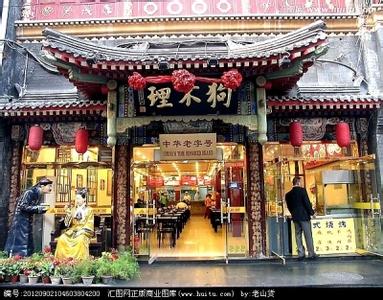
GouBuLi coffee selling "time-honored brand" cross-border operation can be popular and popular
GouBuLi is going to sell coffee! in January 2015, Tianjin GouBuLi Group, a Chinese time-honored brand with a history of more than 150 years, won the permanent right to use Gloria, Australia's largest coffee chain, in China. This means that GouBuLi has become the owner of this well-known international brand in the Chinese market and a sharp weapon for GouBuLi to expand China's local catering market. On February 3, the CPPCC National Committee

Running a coffee shop is a calm thing.
Zhuang Yueli, nicknamed Zhuang Tsai, was born in Yunlin, Taiwan in 1974. He came to the mainland around 1993 to study in the director department of the Beijing Film Academy. After graduating in 1997, he established the first carving time Cafe, which is one of the few chain coffee brands in China. As a non-popular cafe in China, carving time Cafe now has more than 50 chains in more than 20 cities across the country.